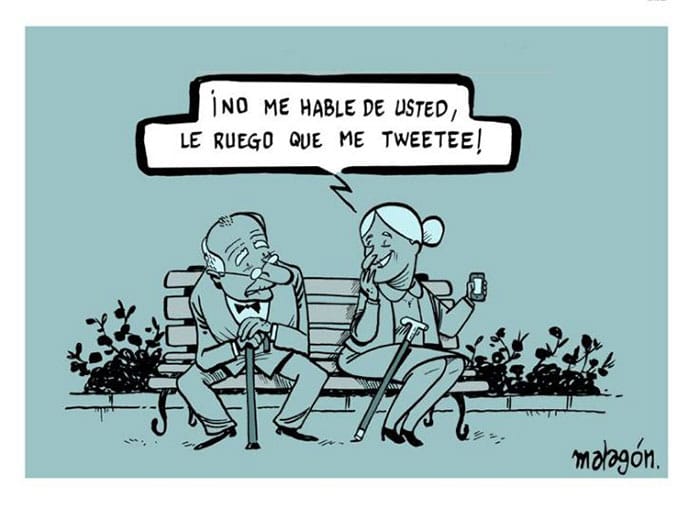
The choice between “tú” and “usted” depends on many factors: age, hierarchy, trust… notice that the forms usted and ustedes always use the 3rd person singular and plural respectively. In this post you will find the difference in conjugations depending on whether you choose between tú or usted.
PRESENT INDICATIVE
| TÚ | USTED | VOSOTROS | USTEDES | |
| HABLAR (TO SPEAK) | Hablas | Habla | Habláis | Hablan |
| COMER (TO EAT) | Comes | Come | Coméis | Comen |
| ESCRIBIR (TO WRITE) | Escribes | Escribe | Escribís | Escriben |
| DESPERTARSE (TO WAKE UP) | Te despiertas | Se despierta | Os despertáis | Se despiertan |
| GUSTAR (TO LIKE) | Te gusta/n | Le gusta/n | Os gusta/n | Les gusta/n |
POSSESSIVES
| TÚ | USTED | VOSOTROS | USTEDES |
| Tu padre | Su padre | Vuestro padre | Su padre |
| Tu madre | Su madre | Vuestra madre | Su madre |
| Tus hermanos | Sus hermanos | Vuestros hermanos | Sus hermanos |
| Tus hermanas | Sus hermanas | Vuestras hermanas | Sus hermanas |
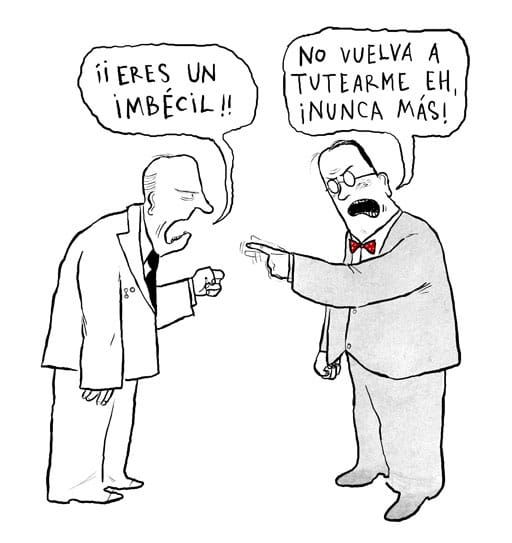
Do you know what the verb “tutear” means? Tutear is to speak to someone using the second person pronoun (tú).
Now we present you with some COURTESY FORMULAS that you can use in conversations you have with your Spanish or foreign friends.
- Y la familia, ¿qué tal?
- Y tu/su mujer, ¿Cómo está?
- ¡Recuerdos a tu/su familia!
- ¡Saludos a Paula!
- ¡Un abrazo a tu/su padre!
Finally, we’ll show you one of the most common FORMS OF ADDRESS in Spanish, so you can learn how to properly address someone when speaking to them, always depending on the context or situation you find yourself in. We hope you find them useful!
| (el) señor | Nombre | |
| + | Apellido | |
| (la) señora | Nombre y apellido |
The table above demonstrates the flexible nature of Spanish formal address:
- Señor (Mr.) can be used with either a first name OR a last name
- Señora (Mrs./Ms.) is typically used with the complete name (first and last name together)
- The definite articles (el) and (la) are optional and often omitted in direct address
Practical Examples
Here are real-world applications of these formal address patterns:
- “¿Es usted la señora Gómez?” (Are you Mrs. Gómez?)
- “Señor Martínez, acuda a recepción.” (Mr. Martínez, please come to reception.)